
Asphalt Driveway Lifespan: What Decides It
Stoutwell Paving · September 29, 2026 · 6 min read
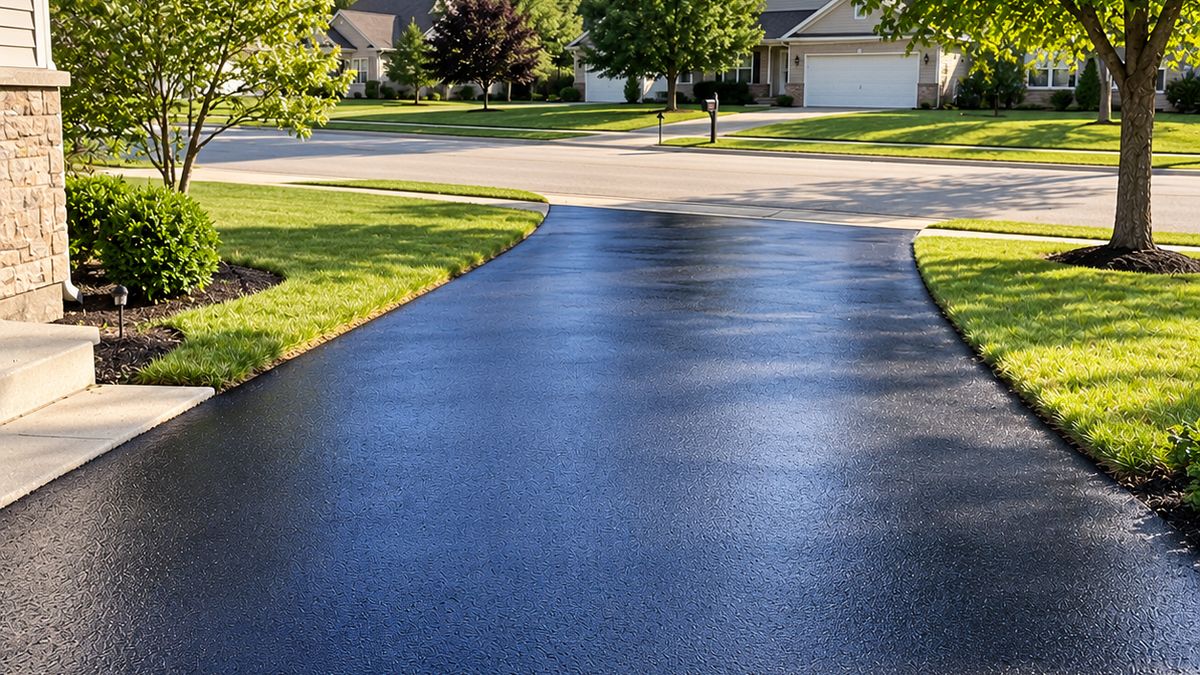
How long an asphalt driveway lasts comes down to how it is built, how water leaves it and the upkeep it gets. A 1975 Maryland Asphalt Association abstract counts 20 years before a first overlay on a properly built pavement. Below, we explain what that figure counts and walk through the factors industry bodies link to shorter or longer life.
How long do asphalt driveways last?
A lifespan figure depends on which milestone it counts to. Here is each milestone with its typical timing.
| Milestone | Timing | Basis | What it counts |
|---|---|---|---|
| First overlay | about 20 years | Maryland Asphalt Association abstract, 1975 | properly built pavements in general |
| Second period, after an overlay | about 20 more years | the same abstract | an overlaid pavement |
| Resurfacing or replacement | when the surface or base fails | the driveway’s condition on site | the driveway itself |
For the price side, see our guide to what a new asphalt driveway costs.
Why lifespan figures differ
They count to different end points. A figure can count to a resurfacing, a replacement or an overlay. The 1975 Maryland Asphalt Association abstract counts to the first overlay, then expects a second period after it. A first overlay, a resurfacing and a full replacement are different events, so 20 years to an overlay is not the same claim as 20 years to a new driveway. For how those two choices compare, see when an overlay beats a tear-out.
They assume different upkeep. A driveway that is built on a sound base and kept sealed serves longer than one left alone, and the sealing intervals themselves vary, as covered in how often to reseal a driveway.
They come from different years. The Maryland figure dates from 1975, and the abstract cannot say how much paving practice has changed since, so its age is a reason for caution, not a correction.
Some describe pavements in general, not driveways. The 1975 Maryland Association abstract is about asphalt pavements in general. The block cracking page cited below is general pavement reference material. Neither was written for a residential driveway.
They assume a sound build. The 20-year figure applies only to pavements that are properly designed, specified and constructed. A driveway that falls short on any of those starts at a disadvantage.
What the build itself contributes
The Illinois Asphalt Pavement Association, an industry body whose driveway page is undated, says 4 inches of full-depth asphalt may be adequate, but 5 or even 6 inches gives a stronger, stable driveway under a wider range of climate and loads. It also describes another option: 6 to 8 inches of compacted aggregate, or gravel, as a base under 3 inches of asphalt. Elsewhere on the page it says hot-mix asphalt is engineered to withstand freezing and thawing.
Below the pavement, the same page says topsoil containing clay should be removed or modified and a solid subgrade needs thorough compaction. That holds for building any new driveway.
The 1975 Maryland Association abstract widens the list. Along with subgrade, it names pavement design, materials, specifications and construction as factors. Its 20-year figure applies to pavements that are properly designed, specified and constructed, so that figure already assumes the build went right.
Water, weather and traffic
The Illinois association says a driveway needs adequate surface slopes for good drainage and that ponding, meaning standing water on or near the driveway, is undesirable. Those slopes are set in the plan, so the question comes before paving, not after.
The 1975 Maryland abstract lists rainfall, frost penetration, temperature differences, terrain and the type and quantity of traffic. It does not rank them, and it does not say how much any one shortens a service period. It covers pavements in general, so it does not address a driveway with an occasional heavy vehicle.
Aging is a separate pressure. Pavement Interactive, a pavement engineering reference site, describes block cracking as the result of binder aging and daily temperature cycling: the aged binder can no longer expand and contract with temperature changes, and the cracks let moisture into the pavement. That page covers pavements in general and shows the mechanism behind the cracking.
What upkeep can and cannot add
Pavement Interactive says the repair for low-severity block cracking is crack sealing, which keeps moisture out of the subgrade. On a driveway, a site visit shows whether the surface calls for it.
None of these sources puts a number of years on sealing. Upkeep still counts: a driveway kept sealed serves longer than one left alone, though no figure here says how many years each task adds.
An overlay can be a second service period. The 1975 abstract expects a second 20 years from an overlaid pavement, and resurfacing is one of the options when a surface wears. Resurfacing does not address major structural damage or severe cracking, so the first period and the condition underneath still matter.
Questions to settle when comparing quotes:
- What asphalt depth and base depth do you plan, and why?
- Where will water go once the driveway is built?
- Should heavy vehicles be expected on it, and does the plan allow for them?
The right driveway depends on the soil and base, the drainage, local permit rules and the weather when the asphalt goes down. Requirements vary by site, scope and jurisdiction; the city or county permit office and an on-site inspection determine what applies.
Frequently Asked Questions
How long does an asphalt driveway last?
A 1975 Maryland Asphalt Association abstract counts 20 years before a first overlay on a properly built pavement, and 20 more after one. How long yours lasts comes down to how it is built and kept up.
Why do driveway lifespans vary?
They count to different end points. A resurfacing, a first overlay and a full replacement are different events; a 1975 Maryland Asphalt Association abstract counts 20 years to a first overlay.
What shortens the life of an asphalt driveway?
The Illinois Asphalt Pavement Association calls standing water undesirable, and a 1975 Maryland Asphalt Association abstract lists subgrade, rainfall, frost, temperature swings, traffic and construction among the factors.
Does a thicker driveway last longer?
The Illinois Asphalt Pavement Association says 4 inches of full-depth asphalt may be adequate, but 5 or 6 inches gives a stronger, stable driveway under a wider range of climate and loads.
Get a written plan for an asphalt driveway
What your driveway needs is settled on site. We pave new asphalt driveways, lay overlays and sealcoat existing asphalt, and our pricing page sets out parking lot prices. To get started on yours, request a free quote.
Ready for a Price on Your Property?
Guides give general ranges. Your free quote covers your own lot or driveway.
 Guides
ADA Parking Requirements: Stall Counts, Sizes and Signs
ADA parking requirements: how many accessible spaces a lot needs, their sizes, signs and aisles. We mark each ADA stall or symbol for $25 to $100. Request a free quote.
 Guides
How Often to Sealcoat a Parking Lot
Reseal a parking lot when the surface turns gray, rough or cracked, not on a calendar. Our sealing runs $0.15 to $0.30 per sq ft. Request a free quote.
Guides Parking Lot Line Painting and Stenciling
What parking lot line painting covers: stall lines, arrows, stencils, colors and paint vs thermoplastic. We repaint lines for $4 to $5 per stall. Request a free quote.
Ready for a Free Quote?
Get a free, no-obligation quote for your property.
Get Your Free QuoteOr call us directly: (919) 219-2946
Final scope, schedule, and pricing are confirmed after an on-site inspection and documented in the written project agreement.
Get a free quote for your lot
We seal, stripe and repair lots for churches, schools and shopping centers.