
Asphalt Overlay vs Replacement for a Driveway
Stoutwell Paving · September 29, 2026 · 5 min read
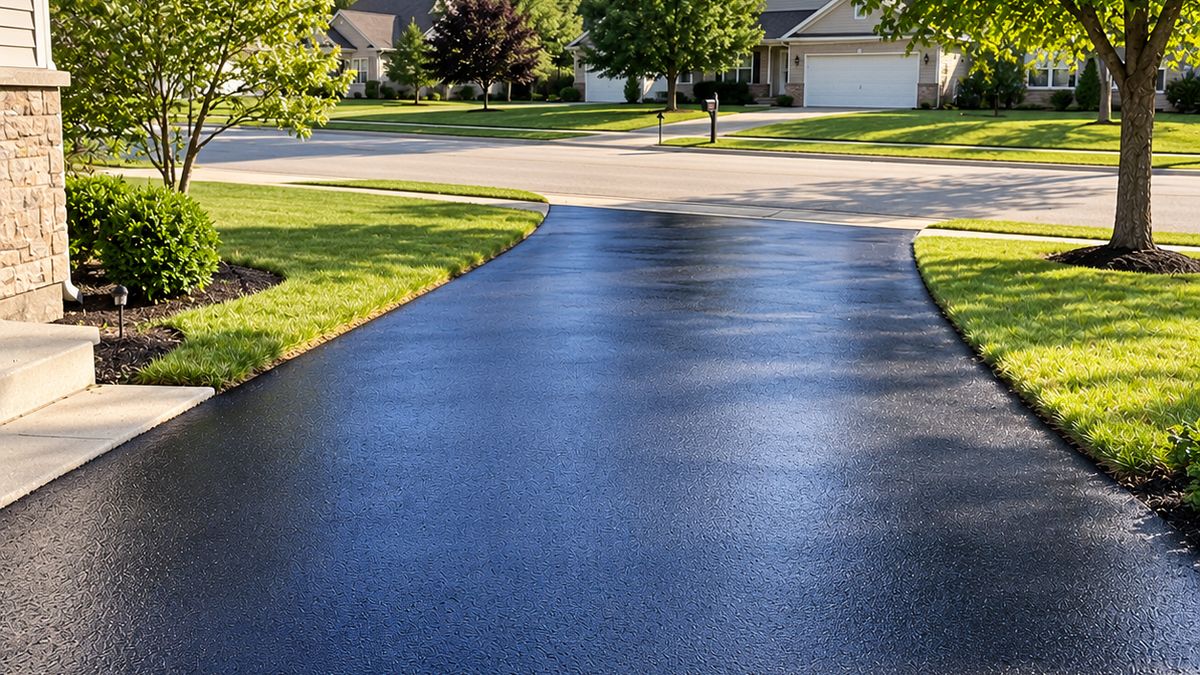
An overlay puts a new hot-mix layer on a driveway whose structure still holds. Replacement breaks up and hauls off one that has failed, then regrades and paves new. Which one fits depends on what is under the surface, and a site visit settles it.
Overlay and replacement: two different jobs
An overlay is a new layer of asphalt over the old one. Stoutwell Paving offers asphalt overlay and resurfacing over a sound existing driveway.
Replacement is the whole job again. The old driveway is broken up and hauled off, the ground and slope can be redone, and new asphalt goes down. Stoutwell Paving offers driveway tear-out and replacement for a driveway that has failed.
The Illinois Asphalt Pavement Association (IAPA), a state trade group, says existing driveways of asphalt or concrete can be overlaid with hot mix asphalt with excellent results. We focus on asphalt, so everything below deals with asphalt driveways.
When an overlay can work
An overlay suits a driveway where the wear is mostly on the surface and the structure underneath still carries its load.
IAPA’s guidance attaches a condition. Before paving, any serious holes or cracks should be patched with asphalt and the patch compacted. Otherwise, IAPA says, the trouble spots may reflect upwards through the new pavement. Reflective cracking is the name for that: a crack or hole in the old surface shows up again in the new one.
On thickness, IAPA says a surface course of 1-1/2 to 2 inches usually suffices for a driveway. We set the thickness for your driveway at the site visit.
An overlay sits on whatever is beneath it. It adds a new wearing surface and does not rebuild the ground or the base. If those are the problem, a new layer covers the symptom and leaves the cause in place.
When the old driveway has to come out
Pavement Interactive, a reference site on pavement engineering, describes fatigue cracking, often called alligator cracking, as a sign of structural failure. It says the cause is inadequate structural support, and it lists a weakened base or subbase, poor design and inadequate compaction among the common factors.
The same page says these cracks let moisture in and can deteriorate into potholes. Its repair advice depends on how far the cracking spreads. For small areas, the cracked pavement is removed, the poor subgrade replaced, drainage improved if needed, and the area patched. For widespread cracking, its repair is an asphalt overlay over the whole surface, and it says that overlay must be strong enough structurally to carry the loading, because the cracked pavement below most likely contributes little or no strength.
Pavement Interactive is describing road practice, and it does not say alligator cracking always means replacement. On a driveway, we weigh what the cracking means on site, against what a tear-out would involve.
IAPA adds the ground side. Its driveway guidance calls ponding, meaning standing water on or near the driveway, undesirable, and in its advice on building a new driveway it recommends removing or modifying topsoil that contains clay and says a solid subgrade requires thorough compaction. Those are jobs on the ground under the asphalt, and an overlay leaves them alone. Reaching them means removing the asphalt above: a dig-out for a small area, as Pavement Interactive describes, or a tear-out for the whole driveway.
How the prices compare per square foot
The asphalt driveway cost guide covers the full price picture. Here are the typical per-square-foot prices that bear on this choice; your own number comes from a free written quote.
- Resurfacing: typically $3 to $7 per square foot, for a new layer over the existing driveway.
- Removal of the old driveway: typically $2 to $4 per square foot, for breaking up the old surface and hauling it off.
- New paving: a new asphalt driveway typically costs $7 to $13 per square foot, covering minor site preparation, materials and labor. A site needing more grading or base work can cost more.
Replacement is two lines on a quote, removal and new paving, and a site visit sets the real figure for each.
One limit applies whatever the price: resurfacing does not address major structural damage or severe cracking. A site visit settles which side of that line a driveway is on.
What to ask at the site visit
Overlay or replacement is decided on site. Bring these questions to the visit:
- Is the cracking on the surface, or is it fatigue cracking that points to the base?
- Where does water sit after rain, and does the slope carry it away?
- Will serious holes and cracks be patched and compacted before an overlay goes on?
- What thickness of new asphalt is planned, and why?
- How will the new edge meet the garage floor, the walks and the street?
- What would replacement involve on this site, and what would it change?
The right driveway depends on the soil and base, the drainage, local permit rules and the weather when the asphalt goes down. Requirements vary by site, scope and jurisdiction; the city or county permit office and an on-site inspection determine what applies.
Frequently Asked Questions
When is an asphalt overlay an option?
When the old driveway still carries its load and the wear is mostly on the surface. The Illinois Asphalt Pavement Association says serious holes and cracks should be patched and compacted first.
What does alligator cracking mean for an overlay?
Pavement Interactive describes alligator cracking as fatigue failure, often from a weakened base or poor drainage. Its repair for small areas is to dig out, replace the poor subgrade and patch; for widespread cracking, a structurally stronger overlay.
How thick is an asphalt overlay on a driveway?
The Illinois Asphalt Pavement Association says a surface course of about 1.5 to 2 inches usually suffices for a driveway. The right thickness for one driveway is set at a site visit.
How do overlay and replacement prices compare?
Per square foot, resurfacing typically costs $3 to $7. Replacement is two lines: removal at $2 to $4, plus new paving at $7 to $13.
Get the site visit before you decide
Whether the old surface takes a new layer or the driveway comes out is settled on site. The typical ranges are listed above and parking lot prices are on our pricing page; request a free quote and ask for both options to be priced on the same visit.
Ready for a Price on Your Property?
Guides give general ranges. Your free quote covers your own lot or driveway.
 Guides
ADA Parking Requirements: Stall Counts, Sizes and Signs
ADA parking requirements: how many accessible spaces a lot needs, their sizes, signs and aisles. We mark each ADA stall or symbol for $25 to $100. Request a free quote.
 Guides
How Often to Sealcoat a Parking Lot
Reseal a parking lot when the surface turns gray, rough or cracked, not on a calendar. Our sealing runs $0.15 to $0.30 per sq ft. Request a free quote.
Guides Parking Lot Line Painting and Stenciling
What parking lot line painting covers: stall lines, arrows, stencils, colors and paint vs thermoplastic. We repaint lines for $4 to $5 per stall. Request a free quote.
Ready for a Free Quote?
Get a free, no-obligation quote for your property.
Get Your Free QuoteOr call us directly: (919) 219-2946
Final scope, schedule, and pricing are confirmed after an on-site inspection and documented in the written project agreement.
Get a free quote for your lot
We seal, stripe and repair lots for churches, schools and shopping centers.