
Parking Lot Line Painting and Stenciling
Stoutwell Paving · November 15, 2026 · 6 min read
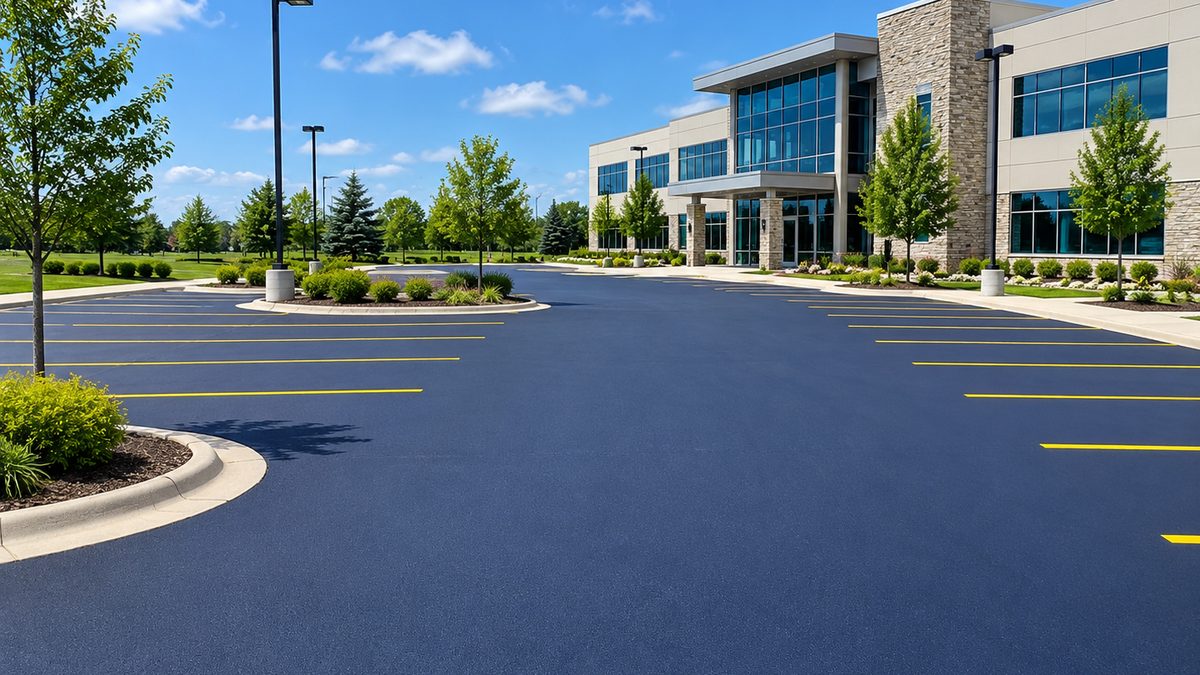
Parking lot line painting is the stall lines, arrows, crosswalks, curbs and painted words that tell drivers where to go and where to park. We repaint an existing layout for $4 to $5 per stall, or $0.20 to $1.00 per linear foot for long lanes, curbs and fire lanes. Your own number comes from a free written quote.
Below is what a line painting job covers, how colors and stencils work, how paint compares with thermoplastic, and how a quote is built.
What line painting covers
A full repaint on a commercial lot usually includes:
- Stall lines, the single or double lines between parking spaces.
- Accessible stalls, with their wider spaces, hatched access aisles and the wheelchair symbol.
- Arrows and lane lines that show which way traffic moves, especially on one-way aisles and drive-throughs.
- Crosswalks and stop bars where people walk from the lot to the door.
- Curbs and fire lanes, painted by the foot in the color your city asks for.
- Stenciled words, such as NO PARKING, FIRE LANE, STOP, visitor or reserved stalls and stall numbers.
Most jobs repaint what is already there. A new layout, where stalls move or are added, is laid out from a plan and priced by the foot; our parking space dimensions guide covers stall and aisle sizes.
Stenciling
Stencils are cut templates for words and symbols. The surface is cleaned, the stencil set in place, and paint sprayed through it, so every arrow and letter on the lot matches. Accessible spaces carry the wheelchair symbol, and in many places a blue background behind it with a white border. Fire lanes carry words such as FIRE LANE or NO PARKING at the spacing the local rule sets; our Texas fire lane striping rules guide shows how much that spacing differs from city to city.
On the quote, each stencil is listed: how many arrows, how many accessible symbols, how many words along a fire lane. Accessible stalls and symbols run $25 to $100 each.
Colors
The federal traffic sign manual uses five marking colors: white, yellow, red, blue and purple. On parking lots three of them matter most:
- White for stall lines and most words and symbols.
- Yellow for curbs, center lines that separate opposing traffic, and some islands and markings.
- Blue to set off accessible spaces, as blue lines beside the white ones or a blue background behind the wheelchair symbol.
That manual governs roads open to public travel, and parking areas and their aisles are left out of its definition, so the colors on a private lot are set mostly by habit and local code. Some cities write them down. Chattanooga, for example, allows only yellow, white or blue pavement markings on private lots the public uses, with white stall lines and blue accessible spaces, and Edmond asks for white stall lines at least four inches wide. Red curbs for fire lanes come from fire codes; Texas uses them as its statewide default. We paint the colors your city and your approved plan call for.
Paint or thermoplastic
Paint is what most parking lots use. It goes down quickly, dries fast enough to reopen the lot the same day in good weather, and is easy to repaint over after every seal. Because sealer covers the old lines, a lot that is sealed gets new paint each time anyway.
Thermoplastic is a plastic material that is melted and laid down hot in a thicker layer. It is common on roads, crosswalks and stop bars, and it costs more to put down than paint. On a lot that is sealed on a regular cycle, its thickness matters less, because the lines are covered and redone with each seal.
Our striping quotes are for paint. If you are weighing thermoplastic for a crosswalk or a heavily driven entrance, tell us when you ask for a quote, and we will tell you plainly what we do and do not offer.
When lines need repainting
Repaint when you can no longer see where a car belongs. Lines wear first at entrances, along the busiest aisles and in the stalls closest to the doors. Faded accessible markings and fire lanes are the ones to fix first, because they carry rules as well as directions. Every seal is followed by a restripe, in the order our sealcoating and striping order guide explains.
What line painting costs
| Work | Our price |
|---|---|
| Restriping an existing layout | $4 to $5 per stall |
| Restriping priced by the foot (lanes, curbs, fire lanes) | $0.20 to $1.00 per linear foot |
| Accessible stall or symbol | $25 to $100 each |
| New layout when stalls move | $0.50 to $1.20 per linear foot |
| Striping minimum | $150 to $350 per job |
As arithmetic only, a 150-stall retail lot with six accessible spaces comes to $576 to $720 for the standard stalls and $150 to $600 for the accessible ones, before fire lanes and arrows. A small lot that needs a few lines touched up meets the minimum. The parking lot striping cost guide shows how a full quote adds up, and the ADA parking requirements guide covers the accessible spaces.
Frequently Asked Questions
How much does parking lot line painting cost?
We repaint an existing layout for $4 to $5 per stall, or $0.20 to $1.00 per linear foot for long lanes, curbs and fire lanes. Accessible stalls and symbols run $25 to $100 each, and small jobs carry a $150 to $350 minimum.
What is parking lot stenciling?
Stenciling is the painted words and symbols on a lot: arrows, STOP bars and words, NO PARKING, FIRE LANE, the wheelchair symbol on accessible spaces and numbered or reserved stalls. Each stencil is listed on the quote.
What color should parking lot lines be?
Stall lines are usually white. Yellow is used for curbs, center lines and some markings, and blue for accessible spaces, often as a background behind the white wheelchair symbol. Some cities set the colors; Chattanooga allows only yellow, white or blue pavement markings.
Is thermoplastic better than paint for a parking lot?
Thermoplastic is a plastic material melted and laid down hot in a thicker layer than paint. It is common on roads and crosswalks and costs more to put down. Our striping quotes are for paint, which is what most parking lots use and what goes back down after every seal.
How often should parking lot lines be repainted?
When you can no longer see clearly where a car belongs, and after every seal, because sealer covers the old paint. Entrances, busy aisles and the stalls nearest the doors fade first.
Get a line painting price
Send the lot’s address, a rough stall count and photos of the lines, arrows and fire lanes. We list every stall, stencil and foot of curb on the quote. Our parking lot striping page covers the full job.
Ready for a Price on Your Property?
Guides give general ranges. Your free quote covers your own lot or driveway.
 Guides
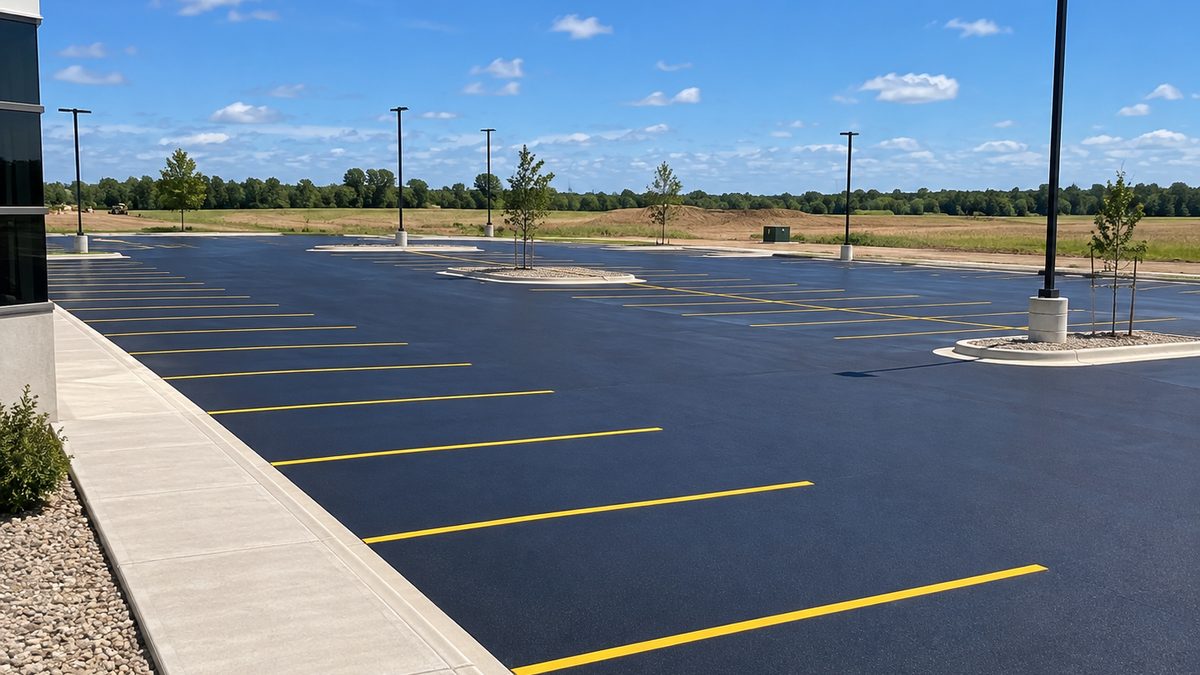
ADA Parking Requirements: Stall Counts, Sizes and Signs
ADA parking requirements: how many accessible spaces a lot needs, their sizes, signs and aisles. We mark each ADA stall or symbol for $25 to $100. Request a free quote.
Guides How Often to Sealcoat a Parking Lot
Reseal a parking lot when the surface turns gray, rough or cracked, not on a calendar. Our sealing runs $0.15 to $0.30 per sq ft. Request a free quote.
 Guides
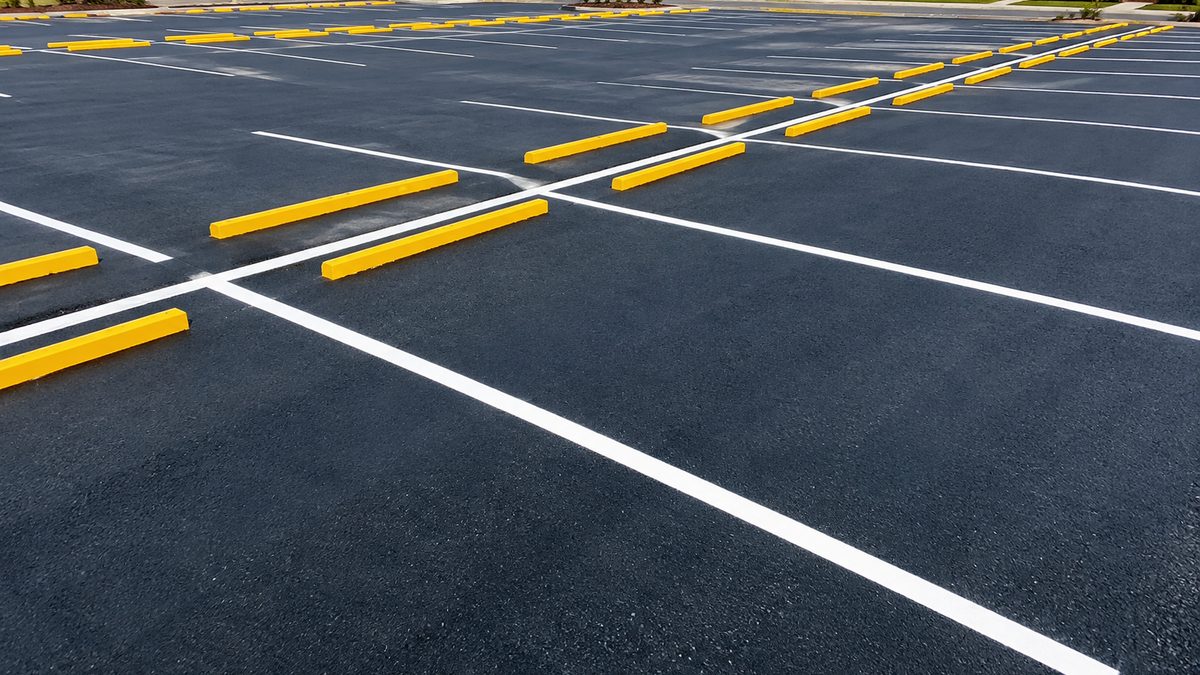
Parking Space Dimensions: Stall Width, Length and Aisles
Standard parking space size, stall width, aisle width and accessible spaces, with real city rules. We lay out new stalls for $0.50 to $1.20 per linear foot.
Ready for a Free Quote?
Get a free, no-obligation quote for your property.
Get Your Free QuoteOr call us directly: (919) 219-2946
Final scope, schedule, and pricing are confirmed after an on-site inspection and documented in the written project agreement.
Get a free quote for your lot
We seal, stripe and repair lots for churches, schools and shopping centers.