
Best Time to Pave a Driveway
Stoutwell Paving · September 29, 2026 · 6 min read
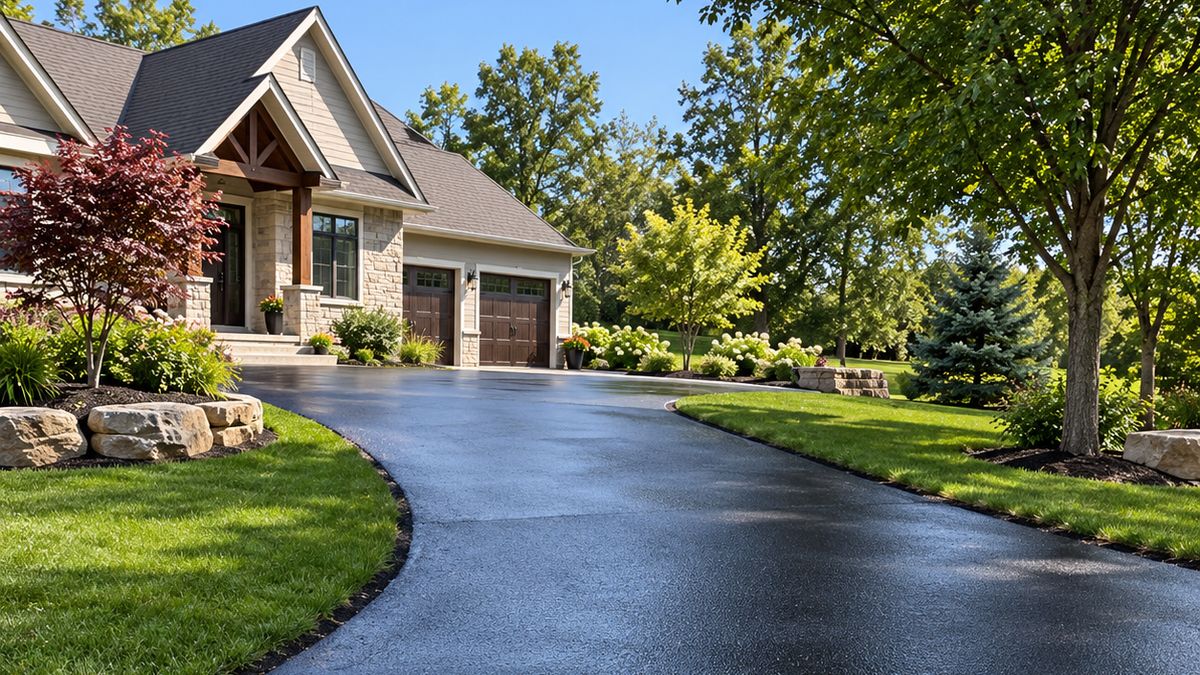
The best time to pave a driveway is usually late spring to early fall. Trade sources set the window by conditions instead: air and surface temperature for the thickness of the layer, a base that is firm and dry, and no rain on the mat.
Below, we walk through what three trade and federal sources say about those conditions, and how the call gets made on paving day.
When is the best time to pave a driveway?
The usual calendar window is late spring to early fall. It is a useful starting point. The trade sources below define the window another way: by temperature, by whether the ground is dry, and by the weather on the day.
A calendar cannot say whether one morning works. A warm week can still be wet, and a cool one can still be dry. The Illinois Asphalt Pavement Association (IAPA), a state trade group, ties the decision to temperature and to the condition of the ground under the asphalt.
Once the mix is down, a separate clock takes over. Our guide to how fast new asphalt cools and hardens covers that stage; here we stay on conditions before and during paving. We pave new asphalt driveways, and these are the points to raise when you plan one.
How cold is too cold to pave asphalt?
IAPA’s driveway page gives temperatures by lift, meaning one layer of asphalt. For a 1-1/2 inch lift it says air and surface temperatures should be above 70 F. For a 2-inch lift it says they should be above 40 F. The page states the figures and does not explain the gap.
IAPA also gives a working time. It says to allow at the very least 20 minutes to place and compact a lift, and that this time should be decreased by about 5 to 10 minutes for every additional 10 mph of wind speed. IAPA bases that time on a mild wind condition, less than 10 mph.
A Federal Highway Administration (FHWA) guideline for hot-mix asphalt pavement, updated 27 June 2017, gives a minimum surface temperature by lift thickness. Here is how the two sets of figures line up:
| Lift thickness | IAPA (air and surface) | FHWA (surface minimum) |
|---|---|---|
| Under 50 mm (under about 2 inches) | 1-1/2 inch lift: above 70 F | 50 F |
| 50 mm to under 100 mm (about 2 to under 4 inches) | 2-inch lift: above 40 F | 47 F |
| 100 mm or more (about 4 inches or more) | No figure given | 40 F |
The two do not measure the same thing. IAPA writes about driveways and gives air and surface temperature; FHWA gives a surface minimum in a federal construction review guideline for hot-mix pavement that does not mention driveways. We keep them as two figures rather than merge them into one rule, and the call for a given job is made on the day.
IAPA adds that warm-mix asphalt may allow lifts to be placed at lower temperatures while still reaching the desired compaction. Whether a mix is warm-mix, and what that changes, is worth getting in writing before a date is booked.
Rain, wet ground and a firm base
The ground under the asphalt matters as much as the air above it. IAPA recommends that paving be delayed until the subgrade is firm and dry. The FHWA guideline says not to place hot-mix asphalt on any wet surface.
The Asphalt Institute, an industry body, answers the rain question in its FAQ. Occasional light sprinkles should not shut down operations, it says, but a steady downpour, light or heavy, should stop paving. Rain cools the mix and can make proper compaction harder.
The same FAQ says puddles covered with hot mix turn to steam, which may cause stripping, the separation of the asphalt binder from the stone. Its instruction is plain: never pave over puddles.
None of the three sources says how long a rained-on site must dry or when a sprinkle becomes a downpour. Those judgments are made on site on the day.
Weather for sealcoating a driveway
Sealcoating is a different job with its own weather. Sealer needs temperatures of 50 degrees and rising over a 24 hour period, and no sealing when rain is imminent within that window. Fresh asphalt also needs at least 30 to 60 days to cure before any sealcoat.
Paving and sealing therefore run on separate clocks, and a paving date does not set a sealing date. Our guide to sealcoating weather and costs covers the sealer side in more detail.
Planning a paving date
Because the sources give general thresholds, the practical step is to find out how they apply to your job. Ask these when you request the quote, and ask for the answers in writing:
- What minimum temperature do you pave at for the lift thickness planned?
- What happens if rain or wind arrives on the day?
- How does rescheduling work, and who decides?
- Is the mix hot-mix or warm-mix?
A written answer gives you something to point to later. For pricing, see what an asphalt driveway costs.
The right driveway depends on the soil and base, the drainage, local permit rules and the weather when the asphalt goes down. Requirements vary by site, scope and jurisdiction; the city or county permit office and an on-site inspection determine what applies.
Frequently Asked Questions
What is the best time of year to pave a driveway?
Late spring to early fall is the usual window. Trade guidance ties the window to temperature: the Illinois Asphalt Pavement Association wants air and surface above 40 F even for a 2-inch lift.
How cold is too cold to pave asphalt?
It depends on lift thickness. IAPA says above 70 F for a 1-1/2 inch lift and above 40 F for a 2-inch lift; an FHWA guideline sets 40 F to 50 F surface minimums.
Can asphalt be laid in the rain or on a wet base?
Not on a wet surface, says an FHWA guideline. The Asphalt Institute says light sprinkles need not stop paving but a steady downpour should, because rain cools the mix.
What weather does driveway sealcoating need?
Sealer needs 50 degrees and rising over 24 hours, and no sealing when rain is imminent. New asphalt also needs at least 30 to 60 days to cure first.
Get the conditions in writing
Trade sources name the conditions; we make the go or no-go call on paving day. Parking lot prices are on our pricing page; for a driveway, request a free quote and ask how weather delays are handled.
Ready for a Price on Your Property?
Guides give general ranges. Your free quote covers your own lot or driveway.
 Guides
ADA Parking Requirements: Stall Counts, Sizes and Signs
ADA parking requirements: how many accessible spaces a lot needs, their sizes, signs and aisles. We mark each ADA stall or symbol for $25 to $100. Request a free quote.
 Guides
How Often to Sealcoat a Parking Lot
Reseal a parking lot when the surface turns gray, rough or cracked, not on a calendar. Our sealing runs $0.15 to $0.30 per sq ft. Request a free quote.
Guides Parking Lot Line Painting and Stenciling
What parking lot line painting covers: stall lines, arrows, stencils, colors and paint vs thermoplastic. We repaint lines for $4 to $5 per stall. Request a free quote.
Ready for a Free Quote?
Get a free, no-obligation quote for your property.
Get Your Free QuoteOr call us directly: (919) 219-2946
Final scope, schedule, and pricing are confirmed after an on-site inspection and documented in the written project agreement.
Get a free quote for your lot
We seal, stripe and repair lots for churches, schools and shopping centers.