
How Long Does Asphalt Take to Cure?
Stoutwell Paving · September 29, 2026 · 6 min read
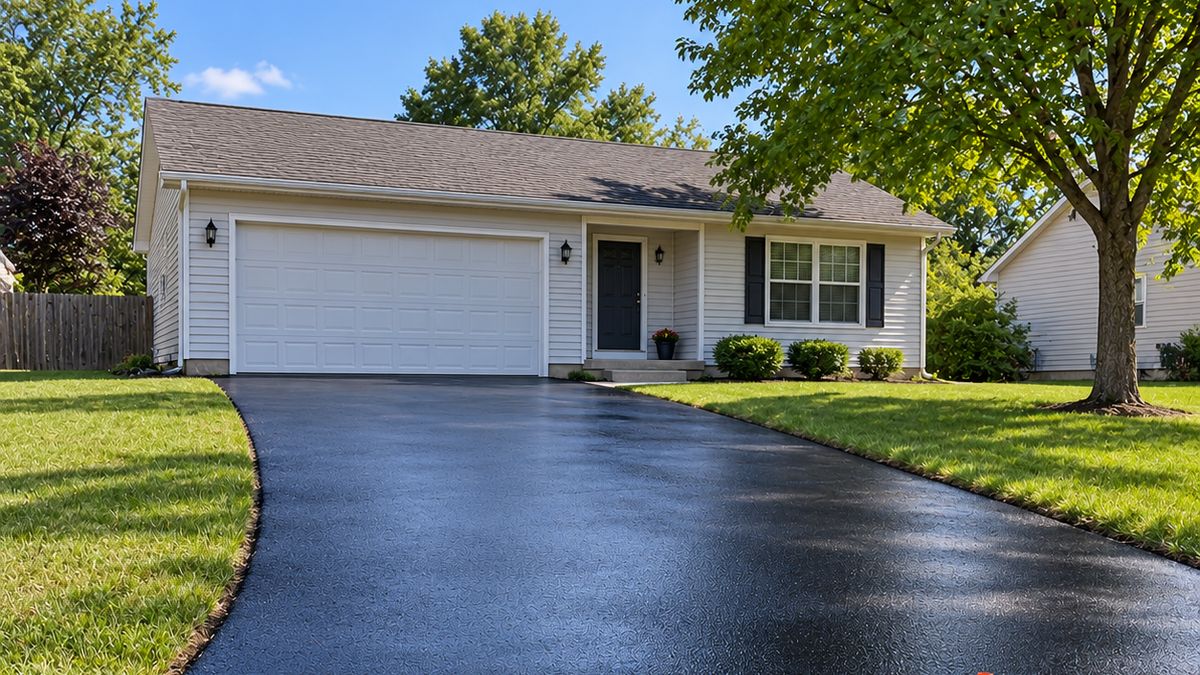
Asphalt hardens fast but cures slowly. Sealing runs on a separate clock: fresh asphalt needs at least 30 to 60 days to cure before any sealcoat. How long one driveway takes to cool depends on its thickness and the weather that day, and when it can take a car is settled on site for that mix.
Below, we separate the two questions people run together: when new asphalt is hard enough to use, and when it is ready for its first sealcoat.
How long does asphalt take to harden after paving?
Hot-mix asphalt is laid hot and it hardens as it cools. The Illinois Asphalt Pavement Association (IAPA), a trade group for the Illinois industry, says asphalt must be placed and compacted while it is hot, and that very soon after paving the mixture cools and hardens.
That is why the word “cure” can mislead. The cooling and hardening of the fresh mat happens quickly, IAPA says. The wait before sealing is a separate figure, and it is measured in weeks. The sections below take them in order.
IAPA’s page is undated, and it describes how hot-mix asphalt behaves on driveways in general.
Stoutwell Paving paves new asphalt driveways, and the timing questions below are worth raising when you get a quote. If you are still choosing a material, see asphalt against concrete for a driveway before you decide.
When can a new driveway carry cars?
IAPA’s statement is the plainest one available: after paving, the mixture cools and hardens, and you can drive on it right away. The association does not name a number of minutes or hours.
Road builders work from temperature rather than a clock. A 1994 report by Chen, Zaman and Laguros for the Oklahoma Department of Transportation, “Cooling Properties of Asphalt Surfaces” (FHWA-OK-94-05), interviewed selected state departments of transportation by telephone. Their abstract says the agencies suggest, based on experience, that it is preferable to open a roadway to traffic when the hot-mix asphalt temperature is below 140 degrees Fahrenheit. The researchers note that this is close to the 150 degrees Fahrenheit reported in a Synthesis of Highway Practice from the National Cooperative Highway Research Program (NCHRP).
It is highway research from October 1994, written for engineers managing lanes of traffic, and a homeowner cannot check the temperature of a mat by looking at it. What governs a new driveway is a written instruction for that mix, based on what was laid, how thick it is and how the day went.
A sensible reading of both sources together: asphalt does not take long to harden, the trade treats temperature as the signal, and when a car or a truck can go on it is set on site for that driveway.
What makes fresh asphalt cool faster or slower?
The same Oklahoma study says state departments of transportation rated hot-mix asphalt thickness and wind velocity as the most significant factors that influence the cooling rate. The report also built a numerical model of cooling and checked its predictions against field data from an interstate site.
Thickness is the easier one to picture. A thin layer has less heat to lose and loses it quickly, while a thick one holds heat longer. Wind carries heat away from the surface, so a still day and a breezy one do not behave alike.
The study is about highway pavement, so its ranking of the factors is the useful part here. The two things that move cooling most are set by the specific job and the specific day, which is why the wait is confirmed on site.
How long to wait before sealing new asphalt
Sealing has its own timetable, and it is much longer. Fresh asphalt needs at least 30 to 60 days to cure before any sealcoat. Once the asphalt is free from oils and sufficiently cured, the sealer can be applied. The 30 to 60 days is a floor, not a target.
The Asphalt Institute answers a different question. Its FAQ says a well-designed and constructed low-traffic pavement, such as a driveway, should not require sealing for approximately 2 to 5 years, depending on the severity of the climate and the quality of the original work. It describes sealing as a way to renew old asphalt surfaces that have become dry and brittle with age.
Put side by side, 30 to 60 days is the earliest a sealer should go on, and 2 to 5 years is how long the Asphalt Institute says a well-built driveway should go without needing one.
Sealcoating is a later, separate job from paving. Our guide to what sealcoating costs covers what a sealing quote should list and why new asphalt is the wrong candidate for one right away.
Questions to ask before paving day
The timeline for your driveway is set on site. Get these answers when you get the quote, and ask for them in writing:
- When can cars go on the new surface, and when can heavier vehicles?
- Where should you park while the asphalt is fresh, and what should you avoid?
- What thickness of mix is going down, and in how many layers?
- When should the surface be sealed, if at all, and who does it?
- What happens to the schedule if the weather changes on the day?
Each answer depends on that site and that mix. A written answer also gives you something to point to later.
The right driveway depends on the soil and base, the drainage, local permit rules and the weather when the asphalt goes down. Requirements vary by site, scope and jurisdiction; the city or county permit office and an on-site inspection determine what applies.
Frequently Asked Questions
How long does new asphalt take to harden?
Hot-mix asphalt hardens as it cools. The Illinois Asphalt Pavement Association says the mixture cools and hardens very soon after paving; when a car can go on it depends on what was laid, how thick it is and the weather that day.
When should new asphalt be sealcoated?
Not at paving time. Fresh asphalt needs at least 30 to 60 days to cure before any sealcoat, and the Asphalt Institute says a well-built driveway should not need sealing for about 2 to 5 years.
What makes fresh asphalt cool faster or slower?
Thickness and wind. A 1994 Oklahoma DOT study, FHWA-OK-94-05, says state DOTs rated asphalt thickness and wind velocity as the most significant factors in how fast hot-mix asphalt cools.
Who decides when a new driveway can take a car?
It is decided on site for that mix, going by what was laid, how thick it is and the weather that day. Ask for the driving, parking and sealing instructions in writing when you get the quote.
Get the timing in writing
The wait for your driveway is set on site for that mix. Parking lot prices are on our pricing page; for a driveway, request a free quote and ask for the driving, parking and sealing instructions to be written into it.
Ready for a Price on Your Property?
Guides give general ranges. Your free quote covers your own lot or driveway.
 Guides
ADA Parking Requirements: Stall Counts, Sizes and Signs
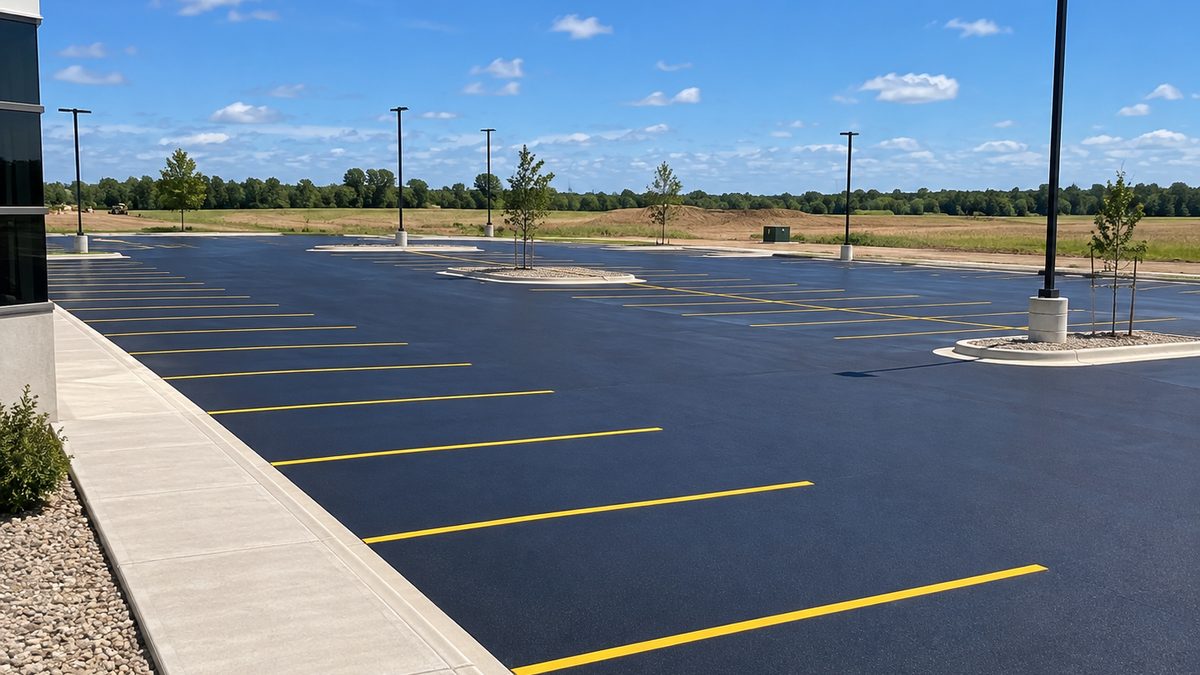
ADA parking requirements: how many accessible spaces a lot needs, their sizes, signs and aisles. We mark each ADA stall or symbol for $25 to $100. Request a free quote.
 Guides
How Often to Sealcoat a Parking Lot
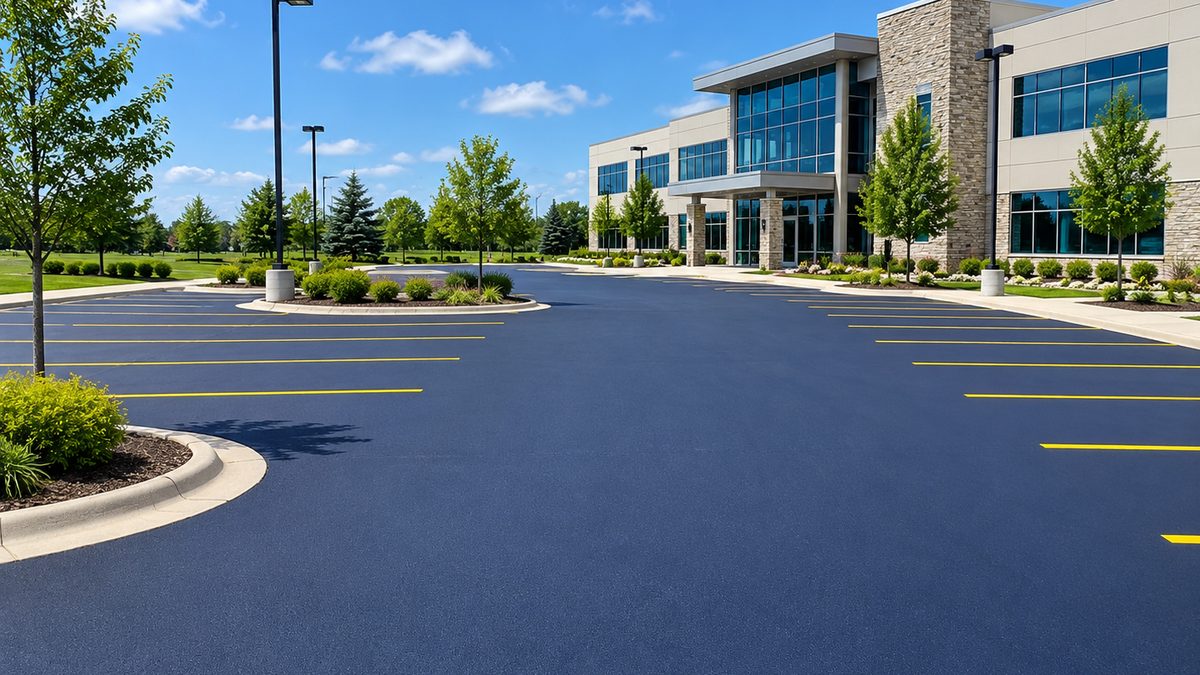
Reseal a parking lot when the surface turns gray, rough or cracked, not on a calendar. Our sealing runs $0.15 to $0.30 per sq ft. Request a free quote.
Guides Parking Lot Line Painting and Stenciling
What parking lot line painting covers: stall lines, arrows, stencils, colors and paint vs thermoplastic. We repaint lines for $4 to $5 per stall. Request a free quote.
Ready for a Free Quote?
Get a free, no-obligation quote for your property.
Get Your Free QuoteOr call us directly: (919) 219-2946
Final scope, schedule, and pricing are confirmed after an on-site inspection and documented in the written project agreement.
Get a free quote for your lot
We seal, stripe and repair lots for churches, schools and shopping centers.