
Chattanooga Asphalt Driveway Soil and Base
Stoutwell Paving · September 29, 2026 · 5 min read
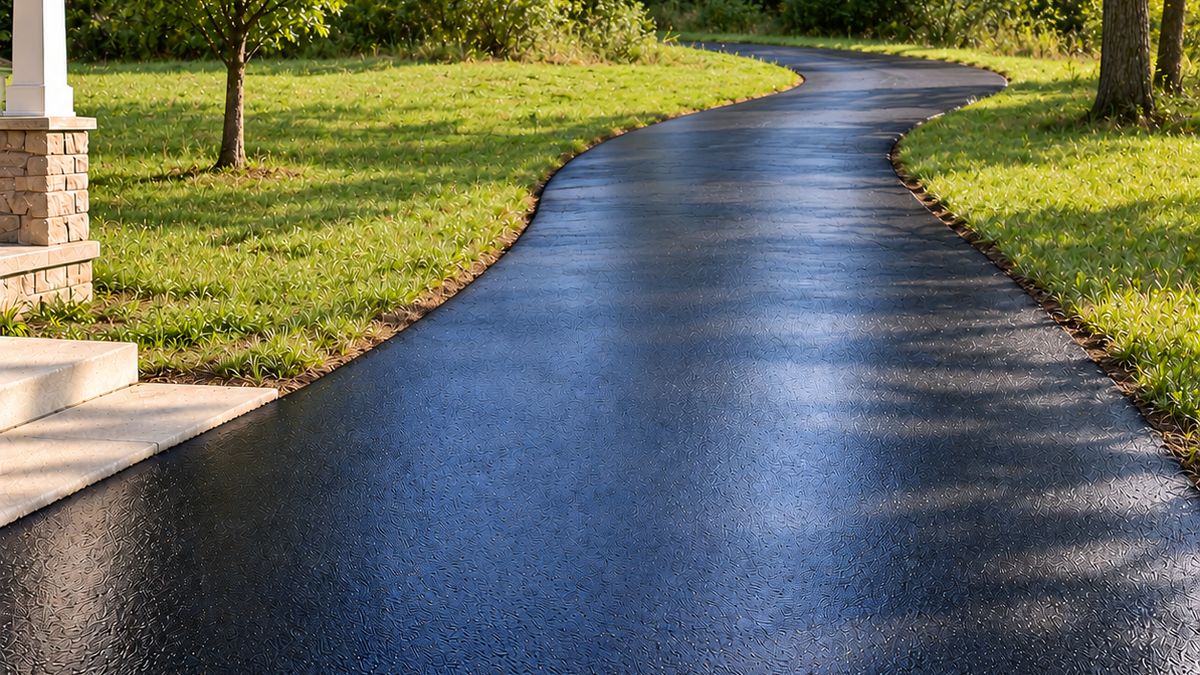
The 1982 USDA soil survey of Hamilton County, Tennessee, describes two soil groups that bear on an asphalt driveway base: cherty soils on high hills and ridges, and clayey soils over limestone. The survey states the limits of each in its own words, and below we read those words for driveway work. Our Chattanooga asphalt driveway paving page covers what Stoutwell Paving offers in the area.
What the Hamilton County soil survey says
The USDA Soil Conservation Service issued the Soil Survey of Hamilton County, Tennessee, in May 1982. It sorts the county into general map units, each named for its main soils. The survey covers Hamilton County only; other counties have their own surveys.
Two units matter here. The Fullerton-Bodine unit is the larger: “These soils make up about 48 percent of the county.” The Colbert-Talbott unit is smaller: “These soils make up about 10 percent of the county.” Those shares are the survey’s figures from 1982, not current mapping.
The survey also warns that “The soils in any one map unit differ from place to place in slope, depth, drainage, and other characteristics that affect management.” That is why the soil under a given street is confirmed on site.
Clay over limestone: Colbert and Talbott soils
The survey describes the Colbert-Talbott unit as loamy soils “that have a clayey subsoil and depth of 5 feet or less over limestone,” on uplands. For building, the survey says: “The slowly permeable clayey subsoil is the main limitation.”
A second entry is closer to paving. For the Colbert-Urban land complex, the survey says Colbert soils are “poorly suited to building sites, roads, and most other engineering uses.” It then names the limits: “very slowly permeable clayey subsoil, low strength when wet, and high shrink-swell potential are the major limiting features of these soils.” The same entry notes that this map unit includes disturbed areas, cut and filled during grading, where “predictions cannot be made about their suitability for use without an onsite investigation.”
Collegedale soils are of minor extent inside the Colbert-Talbott unit. For each Collegedale silt loam map unit, the survey says the soil “is poorly suited to most urban uses because it has moderately slow permeability and low strength when wet.” The USDA official series description for Collegedale, revised in 2001, says its clay subsoil horizons are “plastic or very plastic when wet.” Its type location is in Hamilton County.
Cherty ridge soils: Fullerton and Bodine
The Fullerton-Bodine unit is described as “cherty soils that are more than 5 feet deep over limestone,” on high hills and ridges, with slopes the survey rates from gently sloping to steep. Fullerton soils have a subsoil of red cherty clay.
On development, the survey is short: “These soils are moderately to poorly suited to urban development. Slope is the main limitation.”
A driveway plan on a slope has to account for where water runs and how the grade is shaped, and we settle that on site for each lot.
What low strength and shrink-swell mean for a driveway base
The survey’s glossary defines the terms. Low strength: “The soil is not strong enough to support loads.” Shrink-swell: “The shrinking of soil when dry and the swelling when wet. Shrinking and swelling can damage roads, dams, building foundations, and other structures.” Permeability: “The quality of the soil that enables water to move downward through the profile.” Each one points at water and at what sits under the asphalt.
Even a soil the survey rates more kindly carries this limit. It says of Dewey silt loam, 2 to 6 percent slopes: “Low strength is a severe limitation for local roads and streets.” It adds that “These limitations can be overcome by good design.” Questions to settle before a date is booked:
- What ground preparation and base does the plan call for, and what does the quote say it includes?
- Where will water leave the driveway, and where will it go after that?
- If the driveway is old, does the plan repair it, overlay it or replace it?
For how base and subgrade shape driveway life, read our asphalt driveway lifespan guide. For the choice between covering an old driveway and removing it, see asphalt overlay vs replacement.
What a site visit covers
A soil map points the way, and a site visit settles the driveway. The right driveway depends on the soil and base, the drainage, local permit rules and the weather when the asphalt goes down. Requirements vary by site, scope and jurisdiction; the city or county permit office and an on-site inspection determine what applies.
Stoutwell Paving paves new asphalt driveways, lays overlays and sealcoats in the Chattanooga area, and flags common considerations such as these soil limits when it reviews a driveway with you.
Frequently Asked Questions
What soil is common around Chattanooga?
The 1982 Hamilton County survey puts cherty Fullerton-Bodine soils at about 48 percent of the county and clayey Colbert-Talbott soils at about 10 percent. The soil under your own lot is confirmed on site.
Why does clay soil matter under a driveway?
The survey lists a very slowly permeable clayey subsoil, low strength when wet and high shrink-swell potential as major limits of Colbert soils, so drainage and base preparation deserve attention.
What does a site visit before the quote cover?
Stoutwell Paving flags common considerations such as soil, base and drainage. Conditions vary by site, scope and jurisdiction, and a site visit before the quote is final determines what applies.
Sources: USDA Soil Conservation Service, Soil Survey of Hamilton County, Tennessee (issued May 1982); USDA, Collegedale Official Series Description (revised 08/2001).
Get a written plan for a Chattanooga driveway
A look at your ground turns the 1982 survey into a plan for your driveway. Parking lot prices sit on our Chattanooga pricing page, and for a driveway you can request a free Chattanooga driveway quote.
Ready for a Price on Your Property?
Guides give general ranges. Your free quote covers your own lot or driveway.
 Guides
Chattanooga, TN Parking Lot Upkeep and Cost
Our Chattanooga prices: $0.15 to $0.30 per sq ft to seal and $4 to $5 per stall to restripe. How often does rain make a lot due? Request a free quote.
 Guides
ADA Parking Requirements: Stall Counts, Sizes and Signs
ADA parking requirements: how many accessible spaces a lot needs, their sizes, signs and aisles. We mark each ADA stall or symbol for $25 to $100. Request a free quote.
 Guides
How Often to Sealcoat a Parking Lot
Reseal a parking lot when the surface turns gray, rough or cracked, not on a calendar. Our sealing runs $0.15 to $0.30 per sq ft. Request a free quote.
Ready for a Free Quote?
Get a free, no-obligation quote for property in the Chattanooga metro of Tennessee and north Georgia.
Get Your Free QuoteOr call us directly: (919) 219-2946
Final scope, schedule, and pricing are confirmed after an on-site inspection and documented in the written project agreement.
Get a free quote for your lot
We seal, stripe and repair lots for churches, schools and shopping centers.