
Asphalt Driveway Cost in Vermont (2026)
Stoutwell Paving · October 10, 2026 · 6 min read
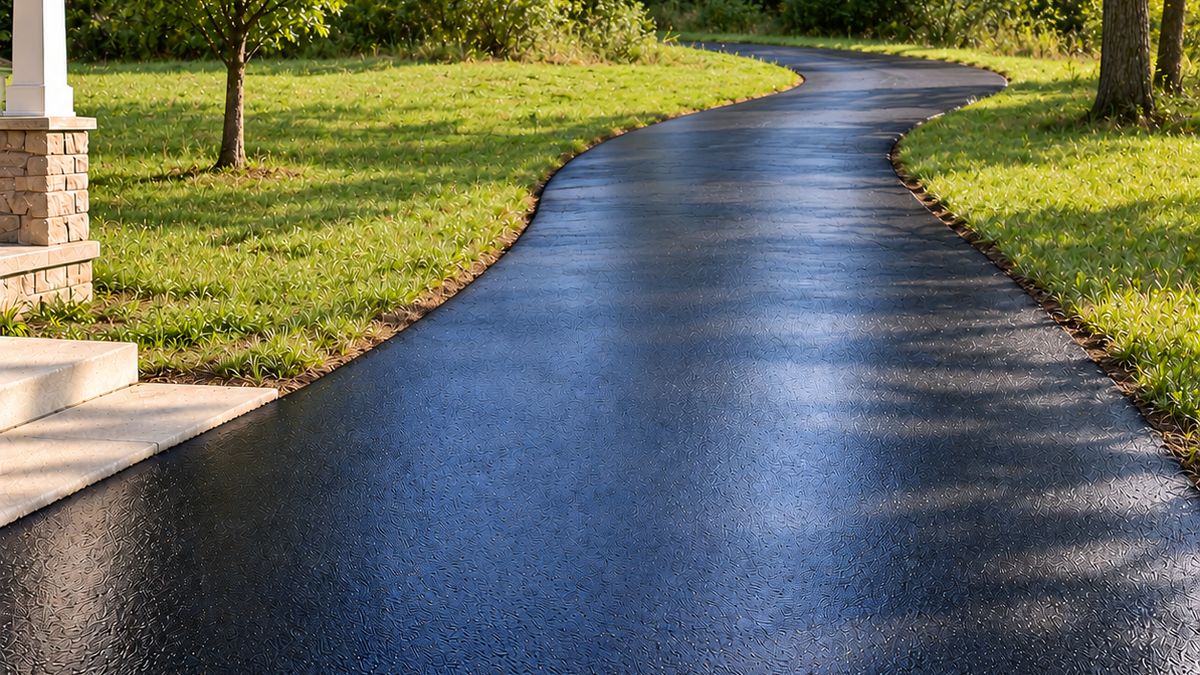
A new asphalt driveway in Vermont typically costs $7 to $13 per square foot installed, and your own number comes from a free written quote. In Vermont the number moves with a long freeze season and with ledge that can sit 20 to 39 inches under the lawn.
At a glance:
- A two-car driveway of 600 square feet (12 by 50 feet) lands at $4,200 to $7,800 for new asphalt.
- Burlington logs 144.7 nights a year at 32°F or lower; Montpelier logs 169.2.
- Burlington averages 87.5 inches of snow a year, and plows load the street end of a driveway.
- Vermont’s state soil, Tunbridge, sits on bedrock 20 to 39 inches down, which can limit how deep a base goes on hill lots.
- Vermont requires residential contractors to register before contracting for more than $10,000. The Office of Professional Regulation decides what applies to your project.
What Does an Asphalt Driveway Cost in Vermont?
| Job | Typical cost | What it looks like in Vermont |
|---|---|---|
| New asphalt driveway | $7 to $13 per square foot | Stone base sized for frost and ledge; $4,200 to $7,800 on 600 square feet |
| Overlay of an existing driveway | $3 to $7 per square foot | Sensible only where frost has not already heaved the old surface; those cracks can reappear through a thin new layer |
| Driveway sealcoating | $0.88 to $2.10 per square foot | Needs a dry day well above freezing, so the Vermont calendar is short |
| Removing an old driveway | $2 to $4 per square foot | Adds hauling; a good moment to repair a wet or heaved base |
Within each range, area, the amount of old surface removed, base depth and the grading needed to shed water move a quote toward the bottom or the top.
What Changes the Price of an Asphalt Driveway in Vermont
Freezing nights and the base. NOAA’s 1991 to 2020 normals put Burlington International Airport at 144.7 nights a year at 32°F or lower, Cornwall in Addison County at 155.1, St. Johnsbury at 161.8 and the Barre Montpelier airport at 169.2. Water held in the stone under a driveway can freeze, heave the surface, then leave a soft patch at thaw. Base depth and edge drainage deserve a close look, and a Vermont quote should name the base depth.
Shallow ledge limits how deep the base can go. Tunbridge, the official State Soil of Vermont, is a well-drained loamy till over bedrock that the USDA series description puts at 50 to 100 centimeters (about 20 to 39 inches) down, on slopes from level to very steep. On a hillside lot that can mean hammering or blasting out rock to reach a full base, or building up with stone and a ditch instead. It is one reason two Vermont driveways of the same size can price far apart.
Snow loads the apron. Burlington averages 87.5 inches of snow a year and St. Johnsbury 87.2, against 58.6 at Cornwall. Plow blades, pushed snow and meltwater concentrate where a driveway meets the road, so the first few feet tend to take the most wear. Before pricing we look at how the apron is built and edged, and where a plowed bank can sit without filling the drainage ditch.
Heat is a small cost line. Burlington logs 8.2 days a year at 90°F or higher and Montpelier 2.0. Fresh asphalt can scuff in a hot spell, but these stations log few such days, so how long to keep tires off new pavement depends mostly on the weather that week. How long asphalt takes to cure covers the wait.
A right-of-way adds a permit. Under 19 V.S.A. 1111, a written permit is required to develop, construct, regrade or resurface a driveway, entrance or approach inside a highway right-of-way, and to obstruct a ditch or culvert or send water onto the road. The Agency of Transportation issues it on a state highway (its residential access standard is B-71A); the town issues it on a town road. Resurfacing is on the list, so ask whether an overlay that runs out to the road edge needs a permit, and ask on any quote who files and what it costs.
From Burlington to the Northeast Kingdom: How the Season Changes
NOAA’s 50 percent dates for the last spring freeze and the first fall freeze show the paving year narrowing as you leave the Champlain Valley.
- Burlington: 29 April to 15 October, with 87.5 inches of snow.
- St. Johnsbury: 13 May to 3 October, with 87.2 inches.
- Montpelier: 16 May to 29 September, with 169.2 freezing nights.
A date near either end of that window deserves a written plan for a cold night, because a mat laid too cold may stiffen before it is compacted. Best time to pave a driveway digs into timing.
What to Check Before You Hire a Paver in Vermont
Vermont’s residential contractor law, 26 V.S.A. chapter 106, requires a contractor to register with the Office of Professional Regulation before contracting for more than $10,000 including labor and materials. Above that amount the contractor must also sign a written contract before taking a deposit and carry liability coverage of $1,000,000 per occurrence and $2,000,000 in the aggregate.
The statute does not name driveway paving. The Office of Professional Regulation decides what applies to your project. Before a date is booked, get these in writing:
- Which job is being priced (new, overlay, sealcoat or removal), and the measured area.
- The depth and kind of stone base, and what happens if ledge turns up.
- Whether old pavement is torn out and carted away.
- Where runoff goes after it leaves the pavement, and how the apron meets the road.
- Who applies for any state or town access permit.
- The paving date, and the fallback if frost is forecast.
When cracks run across the whole old driveway, asphalt overlay vs replacement explains when an overlay wastes money; sealcoating cost covers upkeep after paving. For what each range covers, read the asphalt driveway cost overview.
Frequently Asked Questions
How much does an asphalt driveway cost in Vermont?
Plan on $7 to $13 per square foot for new asphalt, installed. For a Vermont two-car driveway measuring 12 by 50 feet (600 square feet) that works out to $4,200 to $7,800, and a sound driveway that only needs an overlay runs $3 to $7 per square foot. A free written quote gives you your own figure.
How many freezing nights does Vermont get, and why does it matter for asphalt?
NOAA’s 1991 to 2020 normals count 144.7 nights a year at 32°F or lower at Burlington, 155.1 at Cornwall, 161.8 at St. Johnsbury and 169.2 at Montpelier. Those counts describe a long cold season, and water held in a wet stone base can freeze and heave it, so check the depth and drainage of that base as well as the thickness of the asphalt on top.
Do I need a permit to pave a driveway in Vermont?
If the work touches a highway right-of-way, yes. Vermont law requires a written permit to build, regrade or resurface a driveway, entrance or approach there: from the Agency of Transportation on a state highway, from the town on a town road. Ask who files it before you sign.
Does my Vermont paving contractor have to be registered?
Vermont law requires a contractor to register with the Office of Professional Regulation before contracting for residential work of more than $10,000 including labor and materials, and to sign a written contract before taking a deposit above that amount. Get the scope in writing. The Office decides what applies to your project.
Get an Asphalt Driveway Quote in Vermont
Through the quote page, add the approximate length and width, photos of the surface, cracks, low spots and where the driveway meets the road, and which job you want: new, overlay, sealcoat or removal. We price from those.
Ready for a Price on Your Property?
Guides give general ranges. Your free quote covers your own lot or driveway.
 Cost Guides
Asphalt Parking Lot Repair Cost: Cracks and Potholes
Our parking lot crack filling runs $0.65 to $2.25 per linear foot and patching $2 to $12 per sq ft. See what moves each rate, then request a free quote.
 Cost Guides
Parking Lot Sealcoating Cost Per Square Foot
Our parking lot sealcoating runs $0.15 to $0.30 per square foot. See how to estimate a church, school or business lot, then get a free written quote.
 Cost Guides
Parking Lot Striping Cost Per Stall and Per Foot
We restripe a parking lot for $4 to $5 per stall, and a new layout runs $0.50 to $1.20 per foot. See what moves the price, then get a free quote.
Ready for a Free Quote?
Get a free, no-obligation quote for your Vermont driveway.
Get Your Free QuoteOr call us directly: (919) 219-2946
Final scope, schedule, and pricing are confirmed after an on-site inspection and documented in the written project agreement.
Get a free quote for your lot
We seal, stripe and repair lots for churches, schools and shopping centers.