
Asphalt Driveway Summer Heat in Tulsa, OK
Stoutwell Paving · September 30, 2026 · 5 min read
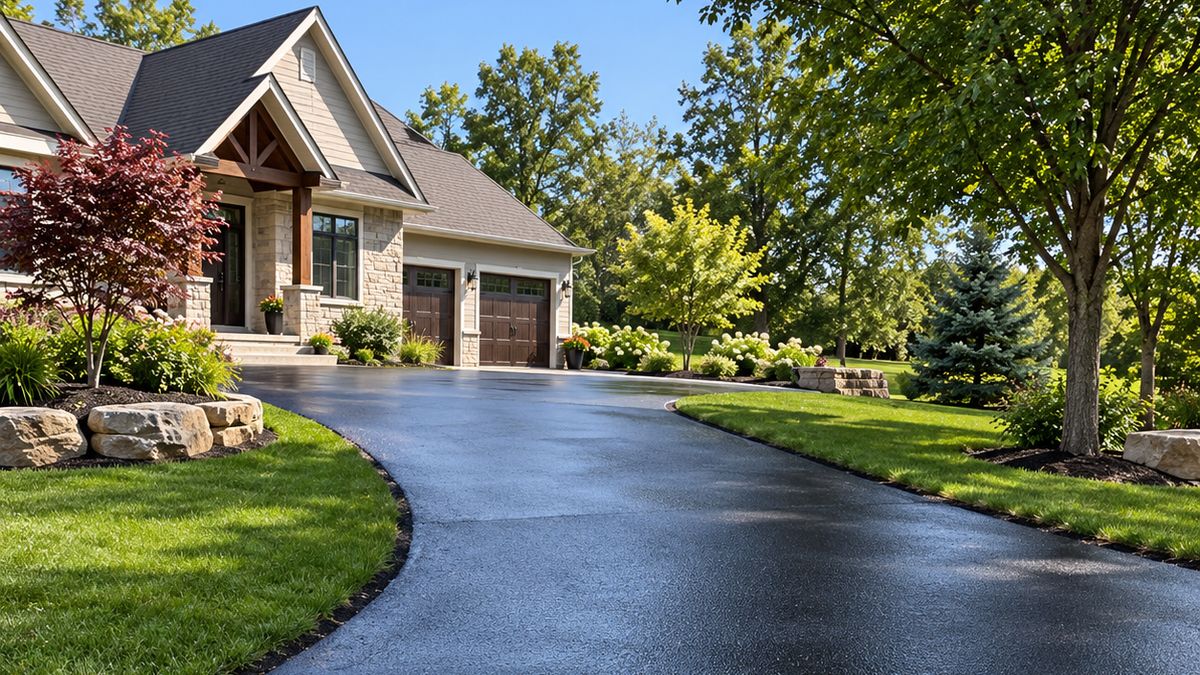
July’s normal high at the Tulsa airport station is 93.6 °F, the warmest monthly figure NOAA gives the station for 1991 to 2020. Federal highway guidance adds a point worth carrying into any summer quote: pavement work has a hot limit as well as a cold one. Below come the station’s heat and rain figures, then what federal guidance and sealer limits say about weather and water-based treatments, then three things to settle before a date is booked.
July and August at the Tulsa Airport Station
NOAA publishes monthly normals for the station listed as TULSA INTL AP, OK US. The file records the air over the airfield, averaged across 30 years.
At the Tulsa airport station the normal high is 88.4 °F in June, 93.6 °F in July, 93.0 °F in August and 84.8 °F in September. July is the hottest month, with August 0.6 degrees behind it. Nights stay warm too: July’s normal low there is 73.1 °F. The Tulsa paving hub covers the service area and the work offered.
The Wettest Month Comes Before the Hottest
Rain follows a different calendar in the same file. At the Tulsa airport station no month gets more rain on average than May, at 5.73 inches. June follows at 4.65 inches, July at 3.76 inches and August at 3.38 inches.
May tops the rain column and July tops the heat column. They are two separate measurements. Each normal smooths three decades of weather, so any one year’s May or July can land well away from these figures in either direction.
Why Water-Based Treatments Care About the Weather
The Federal Highway Administration publishes a Cape Seal Checklist (Publication No. FHWA-HIF-19-043, July 2019) for state and local highway staff. It covers chip seals, slurry seals and microsurfacing on roads. It explains that a slurry seal “relies on the evaporation of water in the emulsion to break,” while microsurfacing contains chemical additives that let it break without relying on evaporation.
Its weather list for slurry seal and microsurfacing says that “high temperatures, humidity, and wind will affect how quickly the treatment breaks,” that work should not begin if rain is likely, and that it should not begin if temperatures could be freezing within 48 hours.
The Pavement Preservation Research Alliance’s chip seal weather page makes a related point about the cool end. It lists “air and surface temperatures are above 60F (16C) and rising” for emulsified asphalts as a suitable condition, and warns that “cool nights make it very tough for chip seals to cure or gain strength” and that “high humidity can lead to longer break times for emulsified asphalts.”
What Driveway Sealer Needs
Driveway sealcoat can be a water-based emulsion too. A common driveway sealer is a mineral filled asphalt emulsion pavement sealer, polymer-modified, and driveways are among its listed uses.
Sealer needs surface and air temperatures of at least 50°F and rising during application, and it should not go down if the temperature is expected to drop below 50 °F within 24 hours afterward. Drying takes 2 to 6 hours at 50% humidity and 73.4 °F, give or take 3.6 degrees, and the final coat dries for 24 hours before vehicles go back on it. The July normal low at the Tulsa airport station, 73.1 °F, sits well above that 50 °F floor, but a normal is a 30-year average, not a forecast for any one night.
The temperatures a driveway needs are covered in the guide to the best time to pave a driveway, and the timing between sealing jobs is in how often to sealcoat a driveway. Parking lot prices sit on the Tulsa pricing page.
A Hot Limit as Well as a Cold One
The same FHWA checklist sets limits at both ends for chip sealing. On the low side, air and surface temperatures should be “50°F and rising unless warranted by agency requirements.” On the high side, it says to “suspend chip sealing if pavement temperatures exceed 140°F unless warranted by agency requirements.”
That is federal guidance for one highway treatment, measured on the pavement surface rather than in the air, so the 140-degree figure does not line up directly with the Tulsa normals, which are air readings. The takeaway: published pavement guidance treats warmth as something a treatment needs and too much surface heat as something that can rule a day out.
Questions for a Summer Paving or Sealing Quote
These sources point to three things to settle before a summer date is fixed.
- For each product on the quote, what temperature range does the work need, both the low end and the high end?
- Is any surface treatment on the quote water-based, and how does it cure on a hot day?
- If the forecast turns after the date is fixed, who decides to postpone, and how is a new date chosen?
We service the Tulsa metro and talk through the temperature limits behind a proposed date before anything is booked. The right driveway depends on the soil and base, the drainage, local permit rules and the weather when the asphalt goes down. Requirements vary by site, scope and jurisdiction; the city or county permit office and an on-site inspection determine what applies.
Frequently Asked Questions
How do July and August compare at the Tulsa airport station?
July, by 0.6 degrees. NOAA’s 1991 to 2020 normals put the July high at the Tulsa airport station at 93.6 °F and August’s at 93.0 °F; July’s normal low there is 73.1 °F.
Why does weather matter for water-based asphalt treatments?
The FHWA says a slurry seal relies on the evaporation of water in the emulsion to break, and that air and pavement temperatures, humidity and wind affect how long a treatment takes to break. An emulsion driveway sealer dries in about 2 to 6 hours at 50% humidity and about 73 °F.
Can it be too hot for pavement work?
For one highway treatment, yes. An FHWA checklist says to suspend chip sealing if pavement temperatures exceed 140 °F unless agency requirements say otherwise. It gives 50 °F and rising as the low end for the same work.
Plan and Price a Tulsa Driveway
When the weather window and the scope are clear, ask for a free Tulsa driveway quote and bring the questions above.
Ready for a Price on Your Property?
Guides give general ranges. Your free quote covers your own lot or driveway.
 Guides
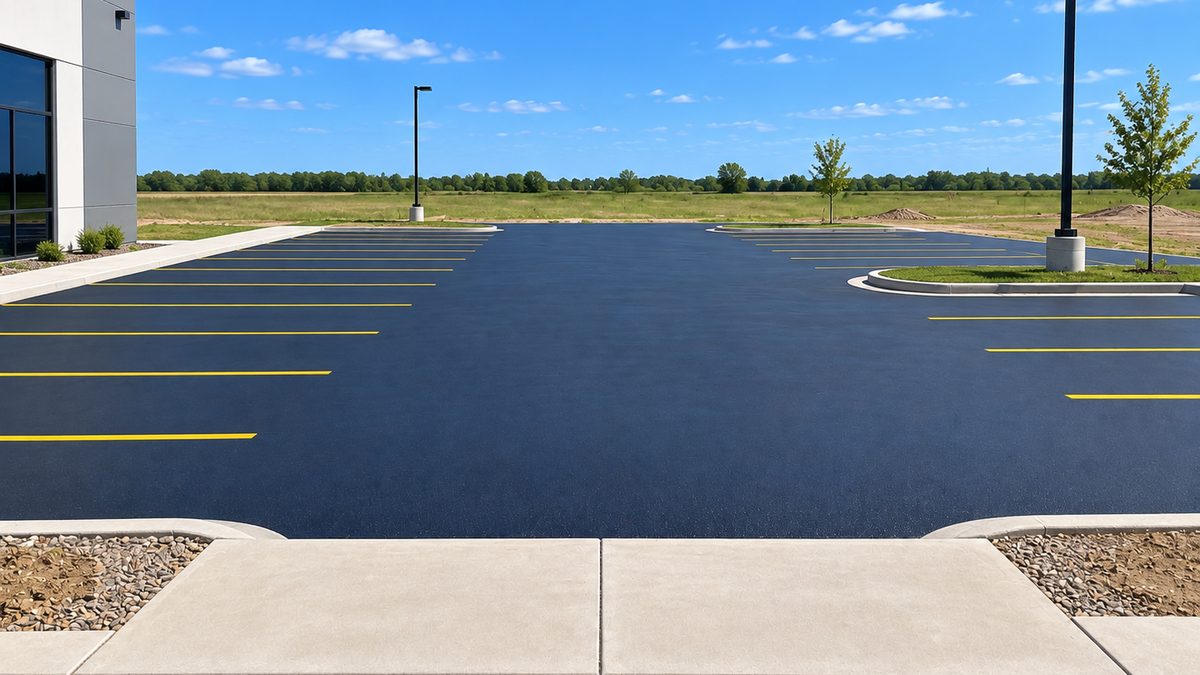
Tulsa, OK Parking Lot Upkeep and Cost
Our Tulsa prices: $0.15 to $0.30 per sq ft to seal and $4 to $5 per stall to restripe. How often do wet springs make a lot due? Request a free quote.
 Guides
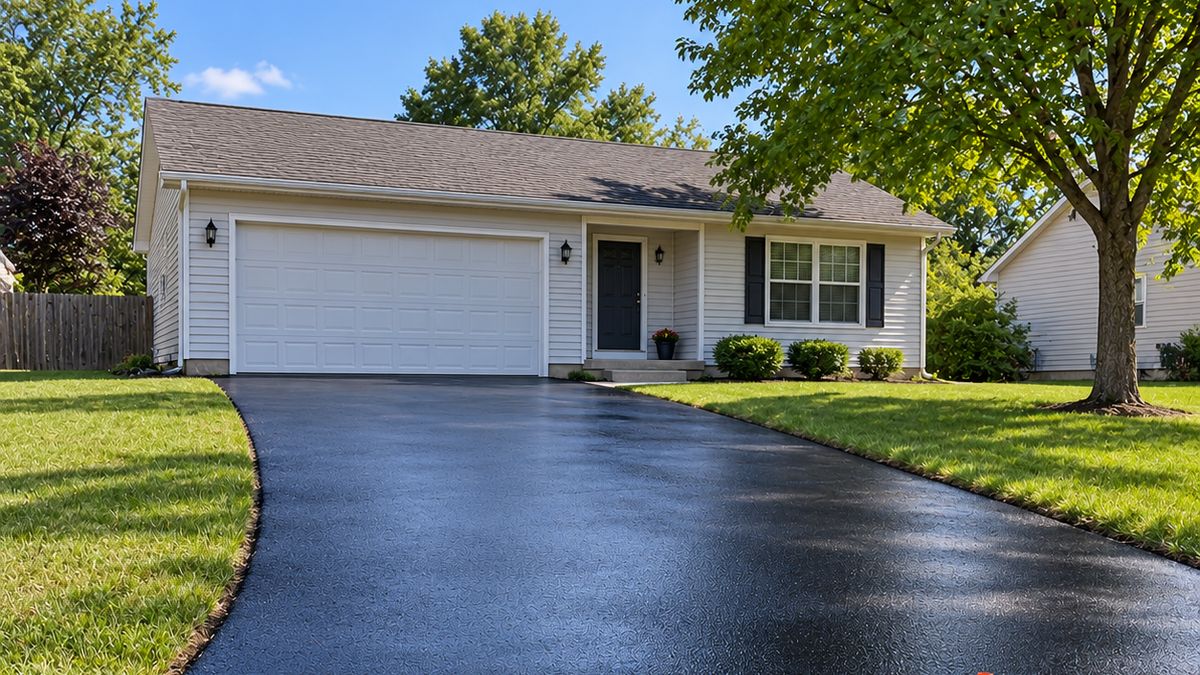
Asphalt Driveway Permit in Tulsa, OK
Asphalt driveway permit in Tulsa: the City's right-of-way form lists sidewalk and driveway work; ODOT's permit applies on state highways. Free quote.
 Guides
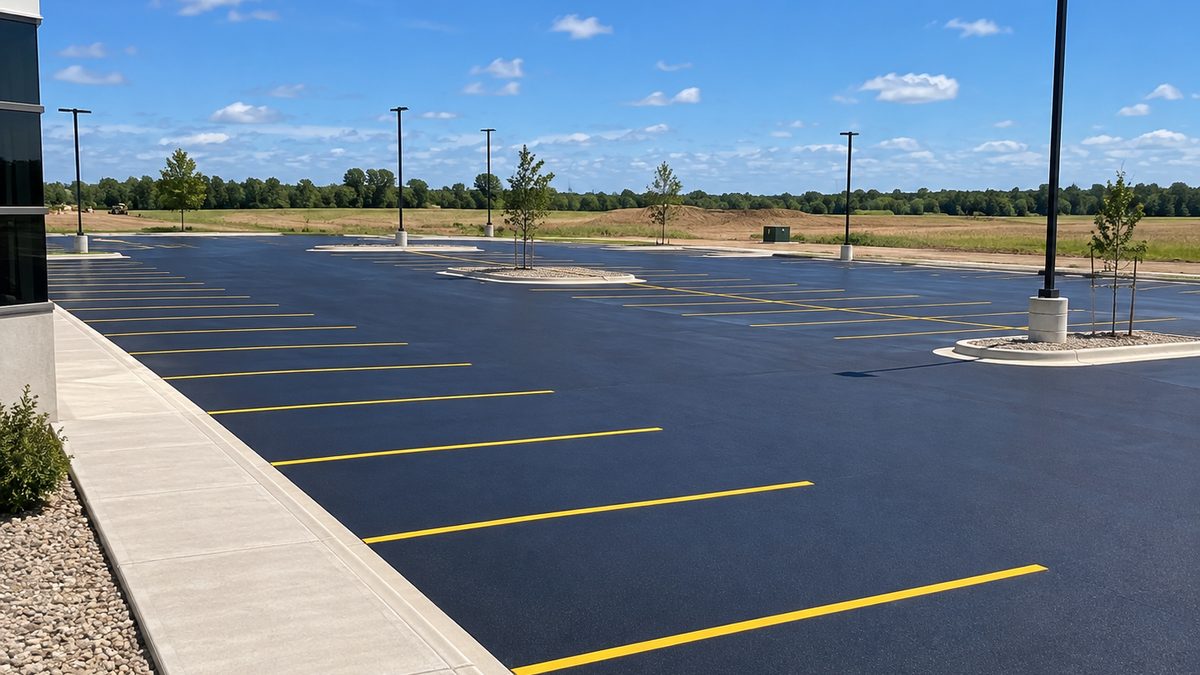
ADA Parking Requirements: Stall Counts, Sizes and Signs
ADA parking requirements: how many accessible spaces a lot needs, their sizes, signs and aisles. We mark each ADA stall or symbol for $25 to $100. Request a free quote.
Ready for a Free Quote?
Get a free, no-obligation quote for property in the Tulsa metro of northeastern Oklahoma.
Get Your Free QuoteOr call us directly: (919) 219-2946
Final scope, schedule, and pricing are confirmed after an on-site inspection and documented in the written project agreement.
Get a free quote for your lot
We seal, stripe and repair lots for churches, schools and shopping centers.