
Asphalt Driveway Soil and Base Data: Hickory, NC
Stoutwell Paving · September 30, 2026 · 5 min read
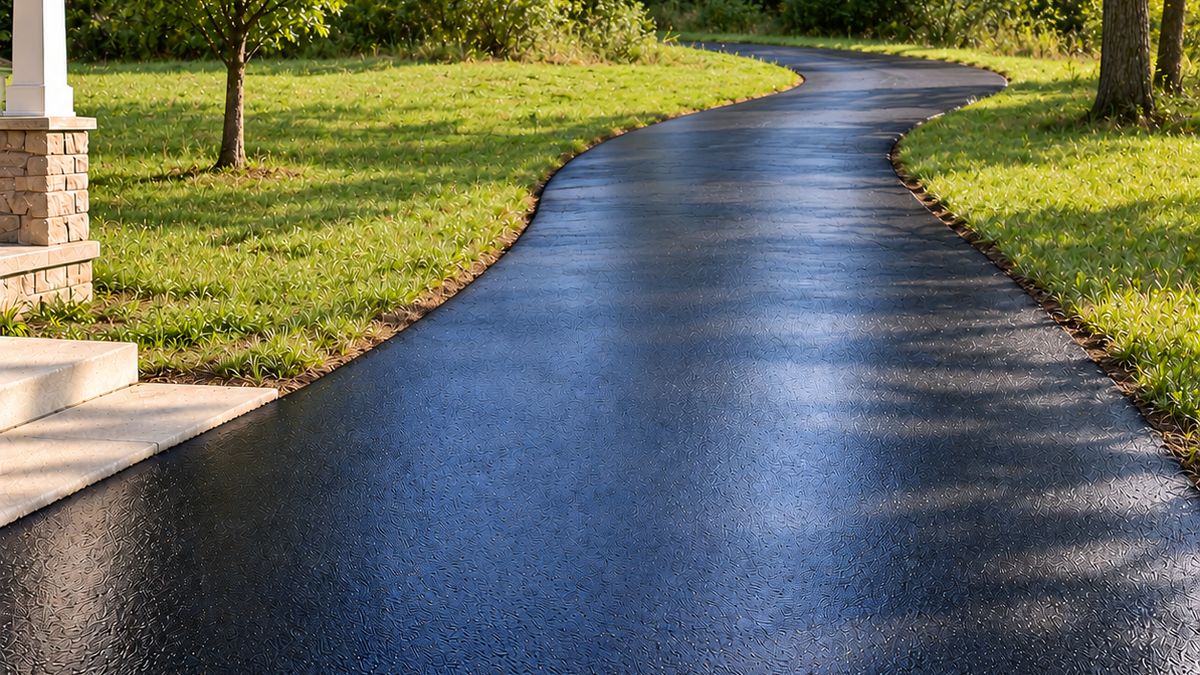
The 1975 USDA soil survey of Catawba County lists engineering test data for the Cecil series, and below we read that data for asphalt driveway soil and base in Hickory, NC, using the survey’s own numbers and classes. The ground under your own lot is checked on site.
One County, Fieldwork From 1963 to 1968
The document is the Soil Survey of Catawba County, North Carolina, a Soil Conservation Service publication “Issued October 1975” and made “In cooperation with North Carolina Agricultural Experiment Station”. It says “The total land area is 394 square miles” and “Major fieldwork for this soil survey was done in the period 1963-1968.”
The survey does not cover Burke, Caldwell or Alexander counties, and it predates any grading or building done after its fieldwork. For how paving works across the wider area, see driveway paving across the Hickory metro. For prices, see the asphalt driveway cost guide.
How the Survey Classes Cecil Soils for Engineering
The survey’s engineering section says its soil samples were tested by the North Carolina State Highway Commission with the Bureau of Public Roads, and that the results are in Table 5, titled “Engineering test data”. The samples cover four series: Appling, Cecil, Hiwassee and Madison, and the survey adds that “All samples were obtained at a depth of less than 7 feet.”
Two classing systems appear there. The AASHO system, named for the American Association of State Highway Officials, sorts soil into groups such as A-4 or A-7, with a group index number in parentheses after the group. The Unified system sorts soil by texture and plasticity into letter classes. The survey explains that “MH and CH are silts and clays that have a high liquid limit”, and that SM and SC are sands that include fines of silt and clay.
If the surface itself is still undecided, choosing asphalt or concrete for a driveway compares the two.
Liquid Limit and Plasticity Index for One Cecil Sample
Table 5 has columns headed “Liquid limit”, “Plasticity index”, “AASHO” and “Unified”. The Cecil sandy loam sample was taken in a wooded area, and the survey’s representative Cecil profile gives the same road directions. Read line by line, the sample’s depths and values are:
- 0 to 2 inches: liquid limit 30, plasticity index 5, AASHO A-4(1), Unified SM.
- 10 to 30 inches: liquid limit 80, plasticity index 37, AASHO A-7-5(20), Unified MH.
- 50 to 75 inches: AASHO A-5(4), Unified MH.
The middle depth matches the representative profile’s layer “10 to 30 inches, red (2.5YR 4/8) clay”. The survey defines the plasticity index as the numerical difference between the liquid limit and the plastic limit, a measure of the range of moisture content over which the soil material is plastic.
What the 2025 Cecil Revision Adds
The USDA Official Series Description for Cecil, “Rev. DTA, RHB, DTA 11/2025”, is a second, later document. It lists “Depth to bedrock: Greater than 152 centimeters (60 inches)” and a C horizon from “127 to 203 centimeters (50 to 80 inches)” of “red (2.5YR 4/8) loam saprolite”. The survey’s own line is “Depth to bedrock is more than 5 feet.”
The description’s type location is in Franklin County, North Carolina, outside the Catawba County survey area. Its remarks say “The December 2005 revision changed the type location from Catawba County, North Carolina to a more representative location”, and “The November 2025 revision changed the format. No data was changed.” It cites the 1975 survey among its additional data.
The description carries no AASHO or Unified class, liquid limit or plasticity index; its tabular data gives sieve and clay percentages instead.
Survey Samples Versus the Ground at Your Driveway
The survey says its test results “indicate the characteristics of the soil at the specified location” and that “The physical characteristics of similar soils at other locations may vary from those of the soil sampled.” One sampled spot, three depths and a series-wide bedrock statement of “more than” 5 feet are a starting point; the ground where your driveway will run is checked on site.
The right driveway depends on the soil and base, the drainage, local permit rules and the weather when the asphalt goes down. Requirements vary by site, scope and jurisdiction; the city or county permit office and an on-site inspection determine what applies.
Frequently Asked Questions
What AASHO and Unified classes does the 1975 survey give a Cecil sample?
Table 5, Engineering test data, gives the Cecil sandy loam sample A-4(1) and SM at 0 to 2 inches, A-7-5(20) and MH at 10 to 30 inches, and A-5(4) and MH at 50 to 75 inches.
Does the Cecil series description list engineering classes?
No. The USDA Cecil description carries no AASHO or Unified class, liquid limit or plasticity index; its tabular data gives sieve and clay percentages instead.
How deep is bedrock under Cecil soils in the Catawba County survey?
The survey says ‘Depth to bedrock is more than 5 feet’ for Cecil, and the USDA series description says ‘Greater than 152 centimeters (60 inches)’. Your own driveway’s ground is checked on site.
Request a Hickory-Metro Quote After a Site Visit
Stoutwell Paving serves the Hickory metro with new asphalt driveways, replacement, overlay and sealcoating, and a written quote follows a visit to the ground itself. See the Hickory pricing page or ask for a free quote in the Hickory metro.
Documents quoted: the Soil Survey of Catawba County, North Carolina (USDA Soil Conservation Service, 1975) and the Cecil Official Series Description (revised 11/2025).
Ready for a Price on Your Property?
Guides give general ranges. Your free quote covers your own lot or driveway.
 Guides
Hickory, NC Parking Lot Upkeep and Cost
Our Hickory prices: $0.15 to $0.30 per sq ft to seal and $4 to $5 per stall to restripe. How often do cold wet seasons make a lot due? Request a free quote.
 Guides
Asphalt Driveway Permit in Hickory, NC
Asphalt driveway permit in Hickory, NC: what the City's Engineering page says about driveway permits and what its standard drawings print. Free quote.
 Guides
ADA Parking Requirements: Stall Counts, Sizes and Signs
ADA parking requirements: how many accessible spaces a lot needs, their sizes, signs and aisles. We mark each ADA stall or symbol for $25 to $100. Request a free quote.
Ready for a Free Quote?
Get a free, no-obligation quote for property in the Hickory metro of North Carolina.
Get Your Free QuoteOr call us directly: (919) 219-2946
Final scope, schedule, and pricing are confirmed after an on-site inspection and documented in the written project agreement.
Get a free quote for your lot
We seal, stripe and repair lots for churches, schools and shopping centers.